

Quick answer: In the custom software vs ready-made tools choice, buy anything standard, such as accounting, email, HR or a basic CRM. Build only where the process sets you apart, no product fits without heavy workarounds, or seat licences will outgrow the cost of owning the code. Most UAE businesses end up with a mix.
Buy ready-made software for anything standard, such as accounting, email, HR or a basic CRM, and build custom software only where the process is what sets you apart, no product fits without heavy workarounds, or seat licences will outgrow the cost of owning the code. Most UAE businesses end up with a mix. This comparison gives you a seven-question framework, compares four routes, works through three-year costs, covers the UAE needs that change the answer, from Arabic to e-invoicing and UAE PASS, and ends with a tool that scores your situation.
Sources: Vertice, SaaS inflation rate (updated July 2026) · Salesforce, pricing update 2025 · Gulf News, 13 September 2025 · Ministry of Finance, Ministerial Decision No. 66 of 2026
The decision in seven questions
The build or buy question is rarely about technology. Answer these seven questions for one process at a time, not for the whole company: the answer for payroll and for your quoting engine will almost never be the same.
| Question | Points to buying when | Points to building when |
|---|---|---|
| Process uniqueness | The same in every company: invoicing, payroll, email | Steps, approvals or pricing rules no product models well |
| Competitive differentiation | Customers would never notice the tool | The process is why customers choose you |
| Integration needs | Stands alone or uses ready-made connectors | Must talk to ERP, CRM, payments, WhatsApp and government systems in real time |
| Data ownership | A standard export and the vendor’s regions are enough | Full control of the data model and where it is stored |
| Scale and seats | A small team needs few licences | Hundreds of staff, partners or customers would each need a paid seat |
| Time to value | Needed this quarter | A phased build is fine and the gain lasts years |
| Budget shape | Predictable monthly cost, no upfront spend | Can fund a build; wants running costs it controls |
If most answers sit in the left column, buy. If the first two land on the right, building at least part of the system is worth costing properly. Integration, data and scale usually decide whether a configured platform can do the job.
Custom software vs ready-made tools: four routes compared
There are four realistic routes, not two. SaaS is a product you use as it comes. Low-code tools such as Microsoft Power Apps let staff or a partner assemble apps on the vendor’s platform. A configured platform is a large product such as Odoo, Dynamics 365, Salesforce or Shopify, extended with custom modules. A custom build is your own code.
| Option | Speed to launch | Fit to your process | What you own | Best for |
|---|---|---|---|---|
| SaaS subscription | Fastest | You adapt to the product | Your data, through the vendor’s export | Standard processes and small teams |
| Low-code platform | Fast | Good for forms, approvals and simple apps | The app logic, but only inside the vendor’s platform | Internal tools and workflow fixes |
| Configured platform | Medium | Good, with custom modules for gaps | Configuration and modules written for you | ERP, CRM and ecommerce with local rules |
| Custom build | Slowest | Exact | The code and roadmap, if the contract says so | Products you sell; processes that set you apart |
Low-code is quick to start, but the apps live inside the vendor’s platform: if you leave, you rebuild them. For CRM choices specifically, see our guide to moving from Excel to a CRM.
Total cost of ownership over three years
Licence prices do not stand still. Vertice, which tracks software contract renewals, reported average SaaS price rises of 16.4 per cent year on year in June 2026, the highest monthly rate it has recorded. Salesforce raised list prices on its Enterprise and Unlimited editions by an average of 6 per cent on 1 August 2025. Seat counts grow too, so a subscription that looks cheap for 20 people can become the largest software bill in the company at 200.
Sources: Vertice, SaaS inflation rate · Salesforce, pricing update 2025
Seat counts grow too, so a subscription that looks cheap for 20 people can become the largest software bill in the company at 200.
The table works one scenario through. It is illustrative arithmetic, not a quote: users grow from 50 to 70 to 90. SaaS assumes an invented AED 150 per user per month, rising 10 per cent at each renewal, plus AED 40,000 of setup. Low-code uses Microsoft’s list price for Power Apps Premium, USD 20 per user per month paid yearly (AED 73.45 at the fixed AED 3.6725 to the dollar), plus an assumed AED 150,000 build and AED 30,000 a year of support. Custom assumes an AED 400,000 build, maintenance at 20 per cent of that a year from year two, and AED 12,000 a year of hosting.
Sources: Microsoft, Power Apps pricing (checked 14 October 2026) · The National, the dirham’s dollar peg since November 1997. All other figures in the table are assumptions for illustration.
| Illustrative year | SaaS per seat | Low-code (Power Apps) | Custom build |
|---|---|---|---|
| Year one | AED 130,000 | AED 194,070 | AED 412,000 |
| Year two | AED 138,600 | AED 91,698 | AED 92,000 |
| Year three | AED 196,020 | AED 109,326 | AED 92,000 |
| Three-year total | AED 464,620 | AED 395,094 | AED 596,000 |
On these assumptions custom is the most expensive route after three years, and right only if it does something the others cannot. Add a fourth year with 110 users and custom becomes cheaper than SaaS: SaaS reaches AED 728,158, custom AED 688,000 and low-code AED 522,048. The crossover depends on three numbers you can estimate: seat growth, price rises and real maintenance cost.
UAE factors that change the answer
A tool that works in London or California can still fail a UAE business after go-live. Check these before signing.
Arabic and right-to-left
Federal Law No. 15 of 2020 on Consumer Protection and its Executive Regulations, Cabinet Decision No. 66 of 2023, in force since 14 October 2023, require most information given to consumers, including invoices, product information and contract and warranty terms, to be presented in Arabic, with other languages allowed alongside. Many global products translate menus but break on right-to-left layouts, mixed text, Arabic PDFs and search; use our list of twelve things that break in Arabic-first UX as a demo script.
Source: CMS, the UAE’s consumer protection rules: key provisions
E-invoicing readiness
Under Ministerial Decision No. 244 of 2025, as amended by Ministerial Decision No. 66 of 2026, businesses with revenue of AED 50 million or more had to appoint an Accredited Service Provider by 30 October 2026 and must implement e-invoicing by 1 January 2027. Smaller businesses follow by 31 March 2027 and 1 July 2027; government entities go live by 1 October 2027. Business-to-consumer transactions are excluded for now. Any finance tool you buy should show how it sends structured e-invoices through a provider, and any custom billing system needs that integration in scope. See our guide to UAE e-invoicing.
Sources: Ministry of Finance, Ministerial Decision No. 244 of 2025, Article 5 · Ministerial Decision No. 66 of 2026 · Ministry of Finance announcement

PDPL and data residency
Federal Decree-Law No. 45 of 2021 on the Protection of Personal Data, in force since 2 January 2022, sets rules for cross-border transfers of personal data; DIFC and ADGM have their own laws, and health and banking data fall under special legislation. Health data is strict: Article 13 of Federal Law No. 2 of 2019 by default prohibits storing or processing health data relating to UAE services outside the country, with exceptions set by Ministerial Resolution No. 51 of 2021. Ask every vendor where data is stored and processed; our guide to the PDPL for product teams goes further.
Sources: u.ae, data protection laws · Gowling WLG, UAE Federal Decree-Law on personal data protection · Global Compliance News, UAE health data law: permitted transfers
Payments, WhatsApp and UAE PASS
Check the tool works with your payment gateway: Stripe supports the UAE, but many businesses settle through a local bank or acquirer, and a product tied to one provider can force a switch. WhatsApp is the other gap. Since 1 October 2026 Meta charges for service messages at each market’s utility rate after 1,000 free a month per number, and 360dialog lists USD 0.0157 per message for the UAE, so messaging volume belongs in the cost model (see our WhatsApp Business API guide).
Sources: Stripe, supported countries · Meta for Developers, non-template message pricing · 360dialog, WhatsApp service message charging from October 2026
UAE PASS, the national digital identity and signature platform, is now used by more than 11 million people, and over 140 private-sector organisations are among the 350-plus entities offering services through it. Its developer documentation describes service-provider integration over OAuth 2.0, with account levels from a verified mobile and email up to a verified Emirates ID. If you need verified identity or digital signatures, confirm a product supports UAE PASS; where it does not, that login is often the first piece worth building.
Sources: Gulf News, 13 September 2025 · UAE PASS developer documentation, overview
How OXEDGE does this
We map which parts of your operation to buy, configure or build before anyone writes code.
- A process inventory scored against the seven questions, with a buy, configure or build call for each workflow.
- A three-year cost model from your seat counts, quoted prices and integrations.
- A UAE check of every shortlisted product: Arabic, e-invoicing, data location, payments, WhatsApp and UAE PASS.
- For what we build: code in your repositories, documentation, tests and a handover plan.
Risks: lock-in, key people and who owns the code
Every route carries risk. With SaaS and low-code it is lock-in: renewal price rises, withdrawn features, and data or apps that are hard to move. Before signing, ask for a full export in a documented format, a renewal price cap and notice periods for changes.
With custom software the risk is people. A system only one developer understands is a liability, employee or freelancer. Insist on a repository your company owns, documentation, automated tests and at least two people who can deploy a fix.
A system only one developer understands is a liability, employee or freelancer.
Ownership of the code is a contract question, not a technical one. Federal Decree-Law No. 38 of 2021 on Copyright and Neighbouring Rights, in force since 2 January 2022, protects computer programs and applications, and lawyers advise that the ownership position is addressed clearly in every development agreement, with written proof of any transfer. Spell out that you own the code written for you, receive the source and credentials, know which open-source licences are used, and whether escrow covers any licensed parts. This is general guidance, not legal advice; have your contract reviewed by a UAE lawyer.
Source: Gowling WLG, the new UAE copyright law 2021: key takeaways
The hybrid path: buy the core, build the edge
For most growing UAE companies the answer is neither pure build nor pure buy. Buy the core every business needs: accounting, HR, email, often the CRM or ERP. Then build the thin layer that is yours: the customer portal, quoting engine, WhatsApp flow, UAE PASS login or the integration that joins three systems into one process.
Someone else maintains and updates the slow-moving core, while your own code stays small enough to own properly. It also limits lock-in, because a well-built edge talks to the core through documented APIs and can be pointed at a different product later. The core stays standard; the edge is where you compete.
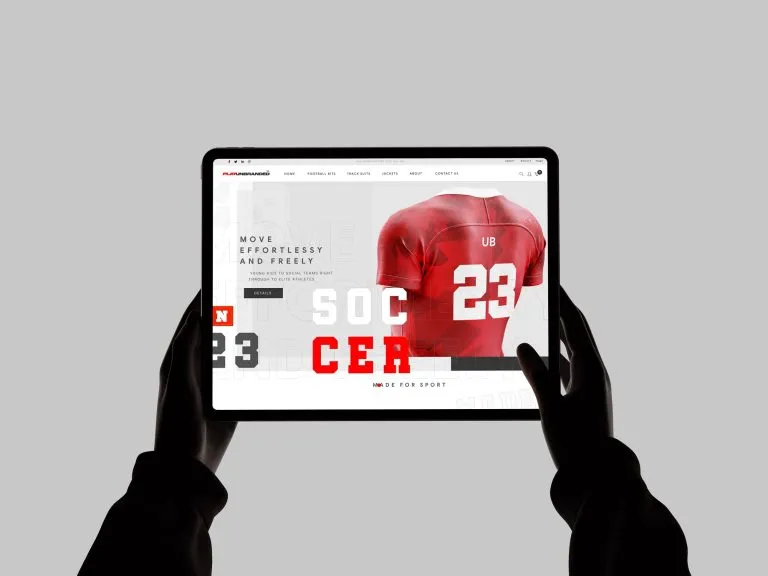
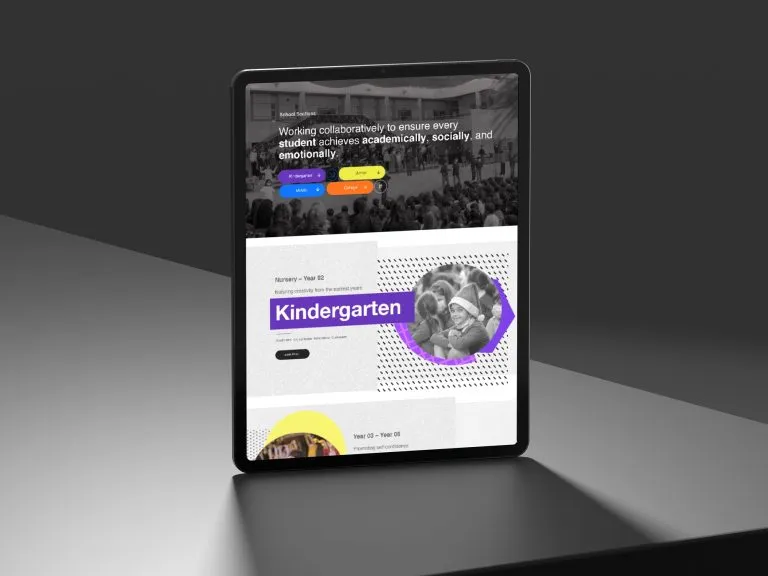
The same applies to customer apps: a mobile app on top of a bought commerce or booking platform is usually quicker than rebuilding the platform. OXEDGE’s portfolio includes a real estate platform, a school app, an electronics store, a sportswear store and a school website; you can see them on our portfolio page.
Buy, configure or build: score your situation
Tick what is true for the process you are deciding on. Treat the result as a starting point.
Nothing ticked yet, so the default is to buy: a standard product will usually do the job. Tick what applies to see the score change.
A score of 6 or more points to building; 2 to 5 to a configured platform or low-code with some custom work; 1 or less to buying. Strong reasons to build combined with a tight deadline or a standard core point to the hybrid route described above.
Questions to ask a software partner
The partner matters as much as the product. These questions separate firms that build systems you can own from firms that build dependence.
- Would you recommend buying instead of building any part of this, and why?
- Who owns the code, designs and data, and where does the contract say so?
- Will the code live in a repository in our name from the first day?
- Which paid services and libraries will it depend on, and at what yearly cost?
- How will you handle Arabic, right-to-left layouts, e-invoicing and where our data is stored?
- Could another team take over from your documentation and tests?
- Can we start with a small first release and see it working before committing to the rest?
Be wary of anyone who recommends a custom build, or a single product, for everything. The honest answer usually mixes both.
Frequently asked questions
Is custom software always more expensive than SaaS?
Upfront, almost always. Over several years, not necessarily: growing seats and rising prices can take a subscription past a build plus maintenance.
Can we start with SaaS and build later?
Yes, and it is often the sensible order. Learn what you really need, keep data exportable, choose products with open APIs and build only what the product cannot do.
What about mobile apps?
If customers book, order or track something often, an app can earn its place. It usually sits on systems you already run, so decide the back end first.
What are the data residency requirements for cloud deployments serving clients in the UAE?
Health data is the strictest. Article 13 of Federal Law No. 2 of 2019 by default prohibits storing or processing health data relating to UAE services outside the country, with exceptions set by Ministerial Resolution No. 51 of 2021. Ask every vendor where your data is stored and processed.
What are the main requirements of the UAE data privacy law?
The PDPL (Federal Decree-Law No. 45 of 2021), in force since 2 January 2022, sets rules for cross-border transfers of personal data. DIFC and ADGM have their own laws, and health and banking data fall under special legislation.
Work with OXEDGE
Spend on software only where it sets you apart.
We would start by listing your core processes and marking each one buy, configure or build, with a three-year cost for the shortlist. You leave the first conversation knowing which tools to keep, which to replace and what, if anything, is worth building.
Start a projectExplore software developmentExplore app development